
Why your restaurant needs a POS with an integrated kitchen
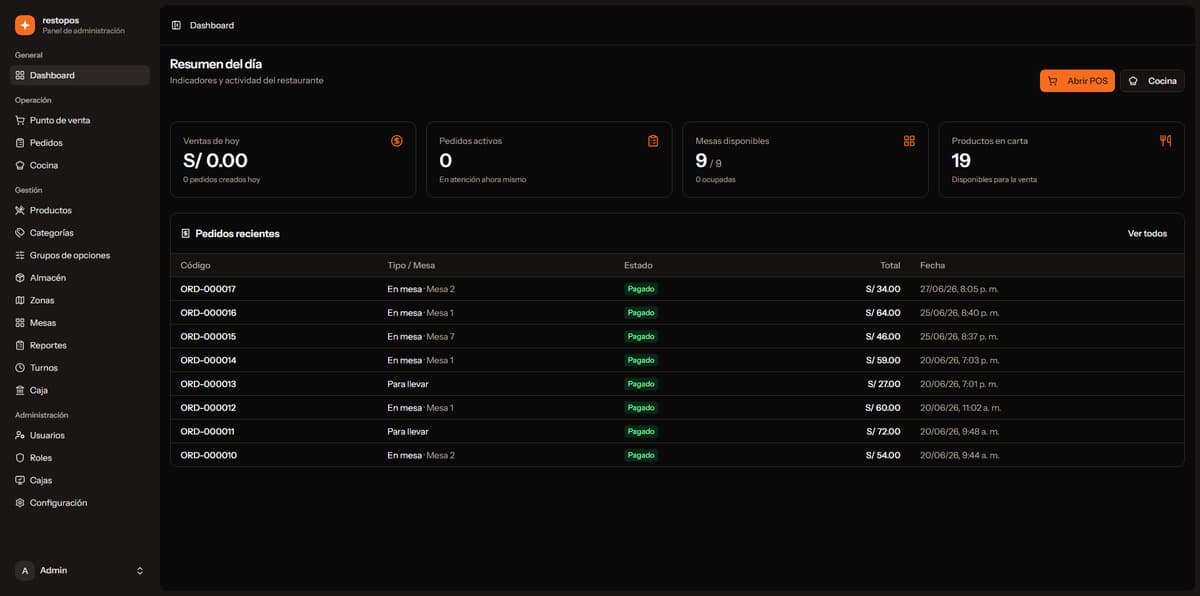
Paper orders continue to be the most common bottleneck in Peruvian restaurants. A waiter writes the order by hand, takes it to the kitchen, the cook interprets it (or not), and the customer waits without knowing what happens to their dish. When there is error, there is friction — and the loser is the business.
The flow your restaurant should have
A modern restaurant system connects three points that today work separately:
1. The living room (touch POS)
The waiter takes the order on a touch screen, selects the dishes, the variants (prey, garnish, without salt) and sends the order to the kitchen with a touch. No more lost orders.
2. The kitchen (KDS in real time)
The kitchen dashboard shows each item ordered by priority. The cook changes the state of each item as he prepares it. The room sees the status without shouting or calling on the phone.
3. The box (shift with summary)
At the end of the day, the cashier closes the shift and sees the exact summary: how much was received through Yape, how much in cash, how much by card, what the average ticket was. No calculators or guesswork.
The inventory that most ignore
Few restaurant systems include recipe inventory. RestoPOS yes. That means that when selling a ceviche, the system automatically discounts the fish, lemon and onion from the warehouse. When an ingredient is about to run out, the alert appears — before the cook discovers that there are no supplies in full service.
For the real segment of the Peruvian market
RestoPOS is designed for neighborhood restaurants and cevicherías, polladas and sangucherías — businesses that bill between S/10,000 and S/60,000 per month and that today operate with a notebook, WhatsApp and Excel.
The price starts at S/ 60/month, with an annual plan at S/ 600 (equivalent to 2 months free). If you prefer that the system be yours forever, the one-time payment is S/ 3,800 with your own deploy and 1 year of support included.
Find out all the details in RestoPOS - Restaurant System.
Did you enjoy this article?
Discover how we can help you scale your business with custom software.
Related Articles

2026 Guide: How to Integrate SUNAT Electronic Invoicing into POS Systems Smoothly
Understand key requirements, digital certificates, electronic service providers (PSE/OSE), and how to issue instant legal invoices directly from your point-of-sale.
Why Specialized Vertical SaaS Outperforms Generic ERPs for Local Businesses
Discover why generic ERPs often fail for small and medium businesses, and how vertical software built specifically for single industries ensures immediate adoption and fast ROI.
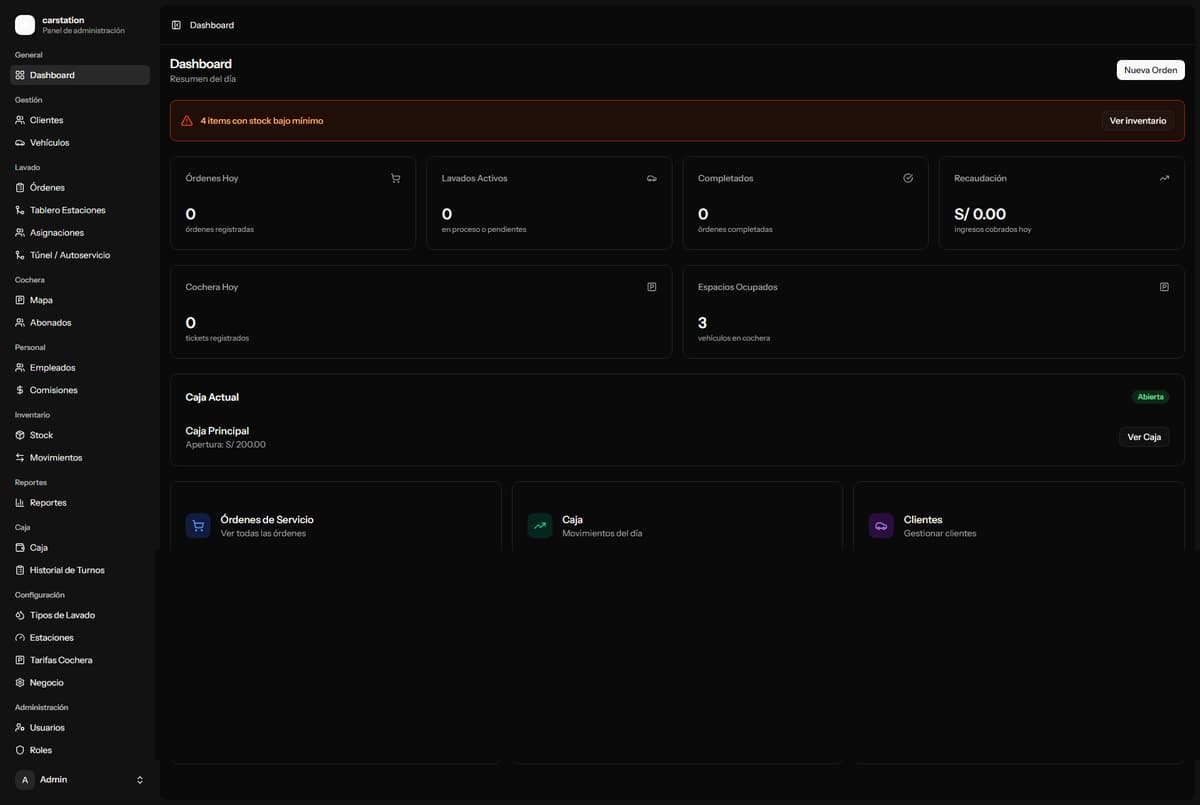
CarStation: Manage Your Car Wash, Parking Garage, and Commissions in One Place
Car washes often struggle with manual commission math and paper parking logs. CarStation automates everything — wash pipeline, staff commissions, parking map, and register closing.