
Hotel restaurant without chaos: how digital management changes the rules
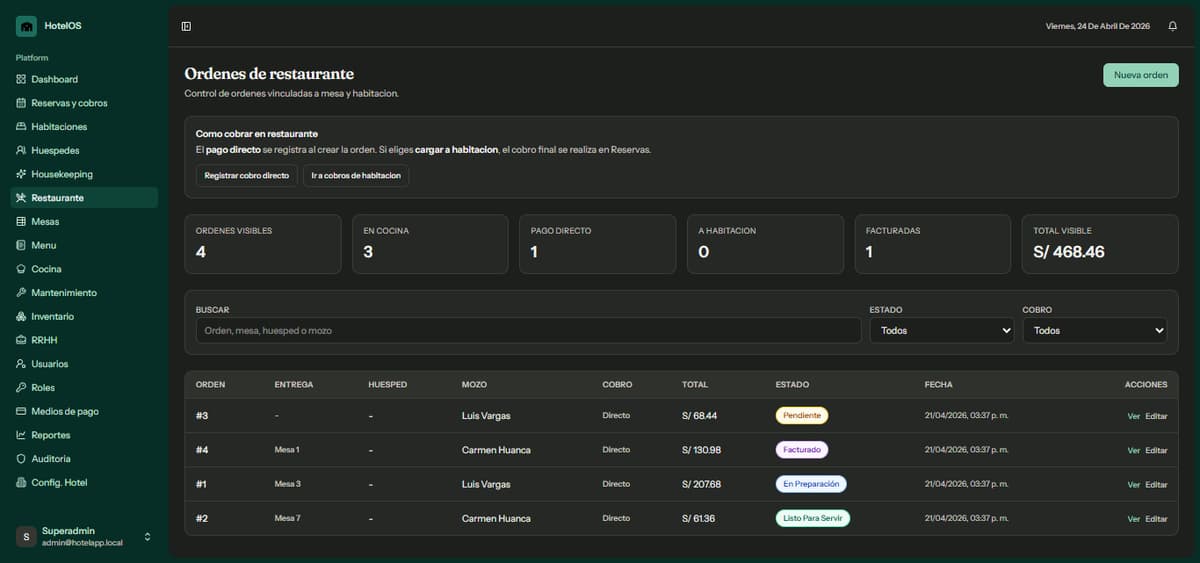
In most small and medium-sized hotels that I visit, the restaurant is the most chaotic module. Not due to a lack of team effort, but because it usually operates with tools completely separate from the reception system.
The waiter writes down the order on paper. The restaurant cashier registers it in his own register. If the guest wants to charge it to their room, someone writes a manual receipt that "reception will record later." When checking out, three different sources of information must be reconciled.
The result: forgotten charges, allocation errors, uncomfortable discussions with guests and time wasted on administrative tasks that should not exist.
The problem of disconnected systems
When the hotel restaurant is not integrated with the reservation system, every additional service the guest consumes is an opportunity for error.
The guest in 302 orders breakfast, has lunch in the restaurant, and has coffee in the afternoon. If each consumption requires a separate manual recording, it is enough for a receipt to be lost or not transferred in time for it to arrive at check-out with an incorrect invoice.
That moment of correction has an invisible cost: the receptionist wastes time, the guest feels that the hotel is not professional and, in the worst case, there is an incorrect charge that generates a claim.
With an integrated system, that scenario disappears.
How the restaurant works in HotelOS
In HotelOS, the restaurant module is neither an add-on nor a third-party integration. It is part of the same system that manages reception, rooms and collections.
Orders linked to rooms
When a hotel guest eats at the restaurant, the waiter or cashier can link the order directly to their room number. The charge is recorded in the reservation account in real time.
At the time of check-out, the receptionist sees all consumption on the consolidated invoice: accommodation + restaurant + any other service. You don't have to ask for proof, you don't have to call anyone, you don't have to rebuild anything.
Real-time table management
The system shows the status of each table in the restaurant: free, occupied or reserved. Staff always know which tables are active and can enter new orders without confusion.
This is especially valuable at hotel breakfasts, where dozens of guests come and go in a span of 2 hours. Having the status of each table visible on the screen avoids confusion and speeds up service.
Digitized menu with categories and prices
The restaurant menu is configured within the system: categories, dishes, drinks, prices and descriptions. When staff takes an order, they select items directly from the digital menu, eliminating writing or interpretation errors.
If there is a price change or a dish of the day, it is updated in the system and everyone sees it immediately.
Restaurant sales reports
At the end of the day, the system generates a sales report for the restaurant: how many orders were processed, which products sold the most, how much was earned from consumption by guests versus external customers, and the total billed.
This data is valuable for making menu decisions, managing kitchen inventory, and evaluating whether the restaurant is being profitable as a complementary hotel service.
The real impact on check-out
The most visible moment of the integration is check-out.
In a hotel without an integrated system, when the guest requests their bill, reception has to call the restaurant to verify if there are pending consumptions, wait for confirmation, add them manually and recalculate the total. If there is a discrepancy, the guest waits while the team reviews papers.
In a hotel with HotelOS, the receptionist opens the reservation and already has the consolidated total: nights of accommodation + breakfasts + lunches + extra services. Check-out takes minutes, not quarters of an hour.
This has a direct impact on the guest experience and the hotel's perception of professionalism.
Does it make sense for small hotels?
Yes, especially for small hotels. Boutique hotels or family lodges that offer breakfast included or have a mixed-use restaurant (guests + general public) benefit the most from this integration.
You don't need to have an 80-cover restaurant to make it worth it. If you serve breakfast to your guests and want this charge to be integrated into the accommodation bill, the integration already pays for itself.
How to see it in action
You can explore the HotelOS restaurant module directly in the online demo:
- Demo: hotelosapp.laravel.cloud
- User: 72341109
- Password: password
Enter the restaurant module, create an order, link it to a room and then open that reservation at the reception to see how the charge appears in real time.
If you want to know how to implement HotelOS in your hotel, write me on WhatsApp at +51 933317879.
---
You may also be interested in reading about how HotelOS integrates the entire hotel management cycle or discovering how to digitize collections and billing in a small hotel.
Did you enjoy this article?
Discover how we can help you scale your business with custom software.
Related Articles
Benefits of digitizing inventory management in SMEs
It details how a digital inventory system reduces errors, improves stock control, speeds up purchases and avoids losses. Includes use cases and recommendations to choose the best solution.
Finance and digitalization: How technology transforms financial management in SMEs
Explore the impact of digitalization on business finance, from process automation to data-driven decision making.
Digital transformation for SMEs: where to start
A practical guide for small businesses that want to make the technological leap without dying in the attempt.